Methodology · 6 min read
Valuing a Ferrari 296 GTB while its market is still forming
· Words The Stable editors
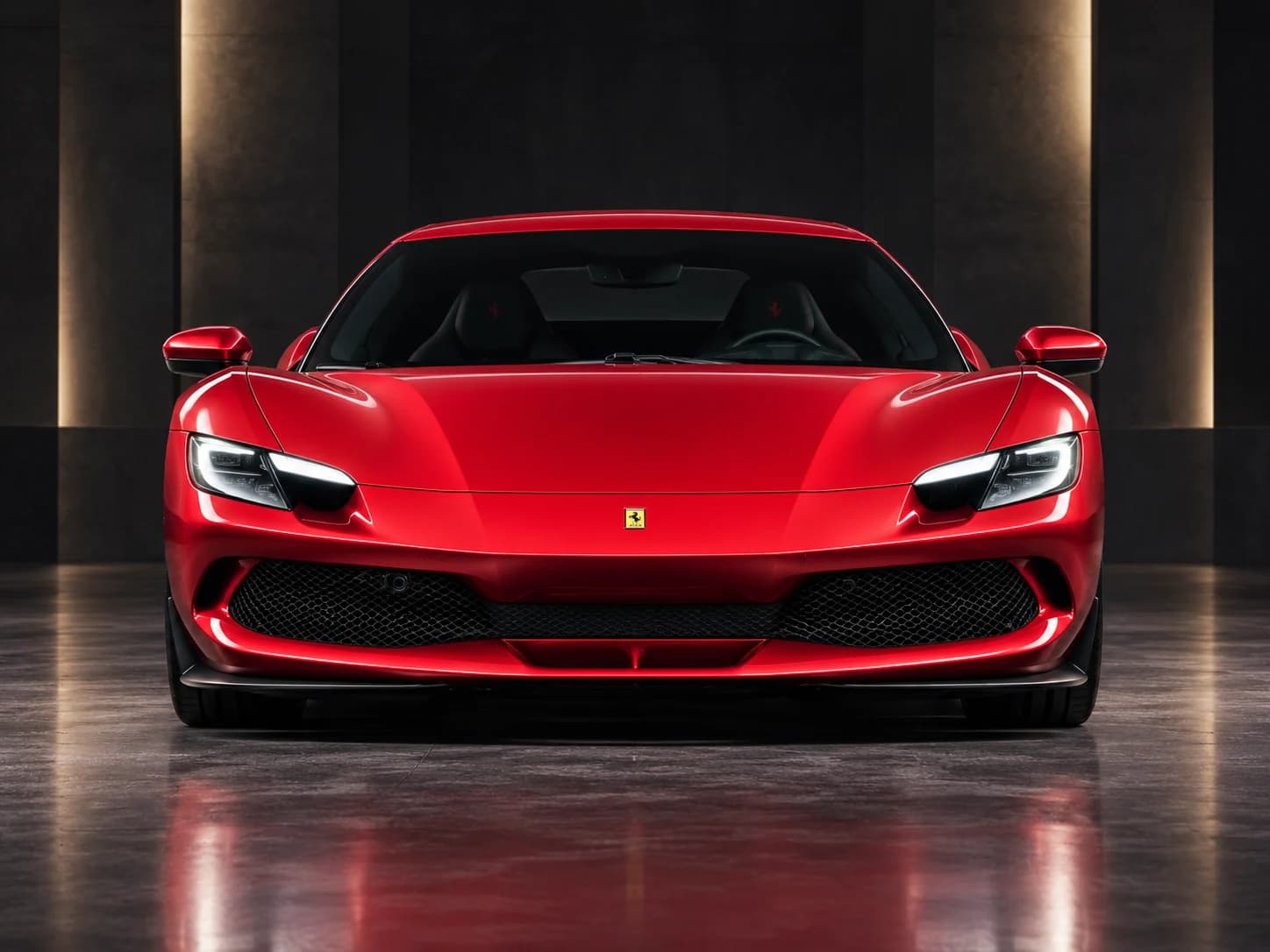
Valuing a 1973 Carrera RS is, in one sense, easy. There are decades of sales, a well-understood hierarchy of variants and a crowd of experts who will tell you, at length, which details matter. Valuing a Ferrari 296 GTB is harder, for the simplest reason: the car hasn’t been around long enough to have much of a past.
So how do you put a responsible number on a car whose market is still writing its first chapter? The short answer is carefully, and with more humility than the car itself would suggest. The long answer starts with the machine.
Start with what the car is
The 296 GTB is a plug-in hybrid Ferrari built around a 2.9-litre, 120-degree twin-turbocharged V6, which is where the name comes from: 29 for the displacement, 6 for the cylinders. The turbochargers sit inside the wide vee, a layout that keeps the engine compact and low and the plumbing short. On its own the V6 makes more power per litre than any production Ferrari before it. Add the electric motor sandwiched between engine and gearbox and the combined output is 830 cv, delivered through an eight-speed dual-clutch transmission to the rear wheels alone.
Ferrari’s engineers took to calling the V6 the ‘piccolo V12’, and once you hear it at full noise you understand the joke. The firing order and the exhaust tuning give it a smooth, rising howl that has very little in common with the gruff, workmanlike V6s most people know. It can also creep silently out of a village on electric power alone for a short distance, which is a sentence that would have caused a scandal at Maranello not very long ago.
It arrived in 2022 as a genuinely new kind of mid-engined Ferrari, and it was quickly joined by the open 296 GTS and the track-focused Assetto Fiorano package, with its lighter components, adjustable racing dampers and the option of extremely aggressive tyres. That variety matters, because ‘a 296’ isn’t one car. It’s several, and the market prices them differently.
Use every sale, but weight them honestly
With a young model, comparable sales are few and scattered across specifications, mileages and selling venues. A sensible appraiser doesn’t throw any of them away, but doesn’t treat them as equals either. Same variant, similar mileage, similar specification and recent in time count for the most. A GTS sale tells you something about a GTB. An Assetto Fiorano sale tells you something about a standard car. Neither tells you everything, and a single headline result at a glamorous auction tells you rather less than it appears to.
A thin market doesn’t mean a guess. It means a wider range, honestly drawn, that narrows as evidence arrives.
Adjust for the things buyers actually pay for
Options on a modern Ferrari are not rounding errors. A well-specified car can leave the factory with a list of carbon-fibre components, special paint, upgraded seats and electronics whose total would buy a perfectly nice sports car on its own. Not all of it carries through to the used market equally. Carbon and the Assetto Fiorano package tend to hold their appeal; highly personal colour combinations can either delight the right buyer or limit the audience. Mileage matters, though on a young, well-kept car it matters less than on an older one. Condition and documentation matter as they always do.
Say how confident you are
This is the part most valuations skip. When the evidence is thin, the honest answer is a range, not a point, and the range should be wider now than it will be in five years. Anyone quoting a precise figure for a car with a handful of comparable sales is either very lucky or not showing their working. The useful question to ask of any valuation is not just ‘how much?’ but ‘based on what?’
Learning from the cars that came before
A young model has little history of its own, but it does have relatives. Ferrari’s mid-engined V8 cars, from the 458 through the 488 to the F8, each followed a recognisable pattern in the years after launch, shaped by production volumes, the arrival of their successors and the appeal of particular versions. The naturally aspirated 458, in particular, found a second life in the market once its turbocharged replacement made its character look precious. Those patterns don’t predict the 296’s future, because the 296 is a different car with a different engine and a hybrid system. But they offer useful context about how the market tends to treat a new Ferrari once the initial waiting lists have cleared.
That context should be used carefully. It can inform how much weight a single early sale deserves and how wide the range ought to be, but it never substitutes for the 296’s own sales. As those accumulate, the car’s own evidence takes over and the borrowed context fades into the background.
The hybrid question
The 296 introduces a variable that older Ferraris simply don’t have: a high-voltage battery and electric drive system. How buyers will value battery health and the remaining coverage on a hybrid system over the long term is one of the genuinely open questions in the modern collector market. Nobody has yet watched a hybrid Ferrari reach its twentieth birthday, and anyone who claims to know how that will go is guessing. For now, the practical approach is the same as for any complex component: a complete service history, documentation of software updates and recalls, and evidence that the car has been looked after by people who understand the system.
Ferrari’s factory maintenance programme, which covers scheduled servicing for the first seven years and transfers with the car, helps here. A 296 that has followed it, with every visit recorded, is a car whose mechanical history is straightforward to verify. That is precisely the kind of evidence that narrows a valuation range.
The hybrid system is a new variable. The answer to new variables is the same as it always was: a complete history.
What makes one 296 worth more than another
In the early sales, the same few factors keep separating cars of the same model and year. Specification comes first: the Assetto Fiorano package, carbon-fibre options and desirable colour combinations attract more interest. Mileage and condition come next, followed by documentation. A car with its original paperwork, its full service record and a clean history will always be easier to price confidently than one with gaps, and confidence is ultimately what a buyer is paying for.
Why the range will narrow
Every valuation of a young car is a snapshot of an evolving picture. Each new sale adds evidence: another specification, another mileage, another moment in time. As those sales accumulate, the spread between the low and high end of the range tends to narrow, outliers become easier to identify, and the factors that genuinely move value become clearer. A year from now, any honest number for a 296 should rest on more sales than it does today. That is the right way to think about a car whose market is still forming, and it is far more useful than a confident figure built on very little.
The long view
There is a temptation, with any new Ferrari, to treat it as a financial instrument first and a car second. The 296 rewards resisting that temptation. It is one of the most complete driver’s cars Ferrari has built in years: shorter and more agile than the cars it followed, startlingly quick, and possessed of an engine that makes a convincing case that the number of cylinders matters less than what you do with them. Whatever its market settles at, it will be remembered as the car that proved a hybrid V6 could feel like a proper Ferrari. Cars that change minds tend to age well.
The Stable editors