Collections · 6 min read
Three pedals, no plans to sell
A 997 GT3 RS, an NSX-T and an F355 Spider: three manuals, each the last of something. Why the collection built around a third pedal is the one that never comes up for sale.
· Words The Stable editors · Photographs Stable Studio
There is a particular kind of garage that never shows up at auction. You know the one. Three cars, nose-in, battery tenders blinking in the dark like a very patient airport. Nobody is flipping anything. Nobody is waiting for the market to peak. The cars come out on Sunday mornings, go home warm, and go back under their covers smelling faintly of hot brakes and good decisions.
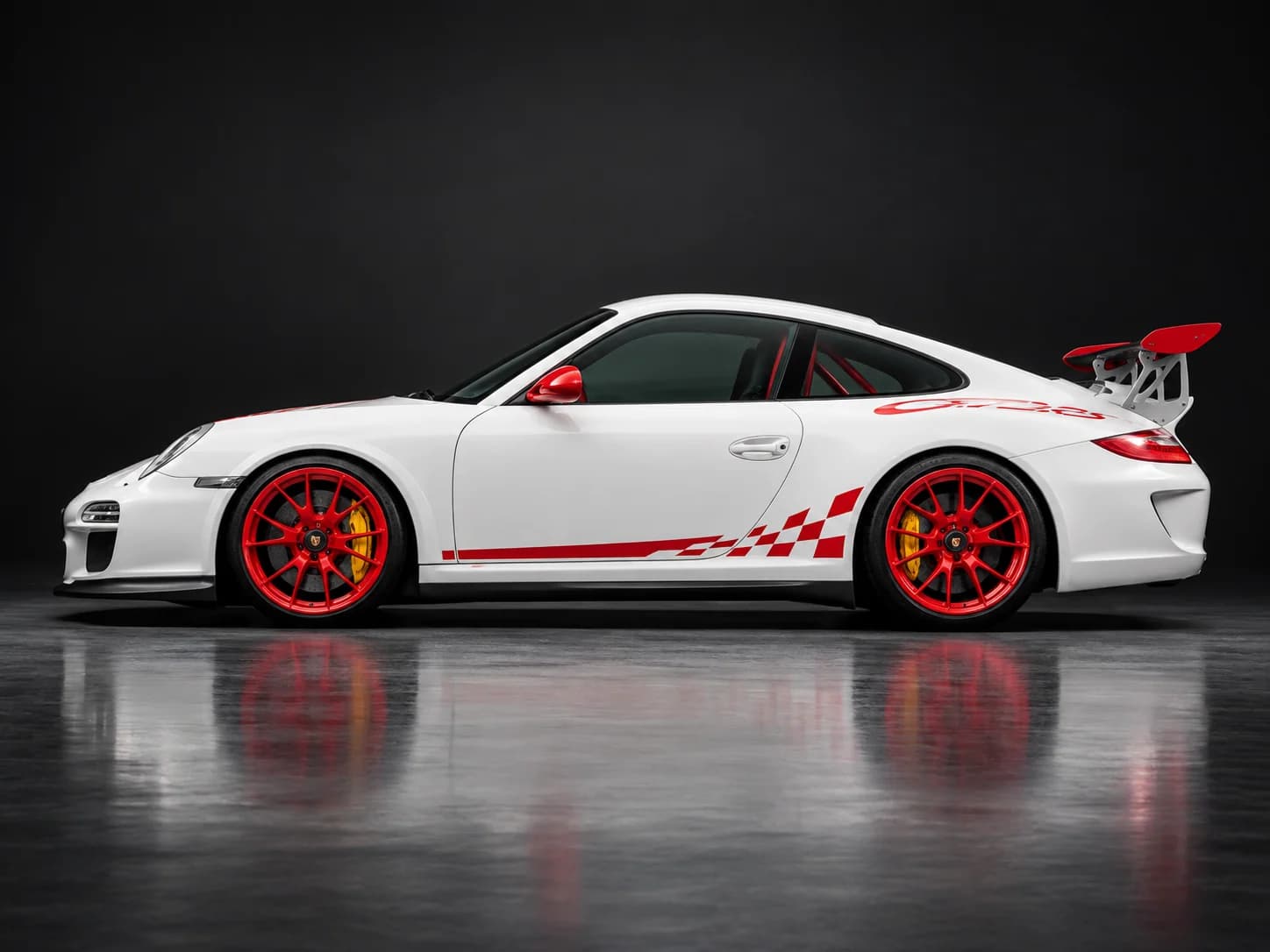
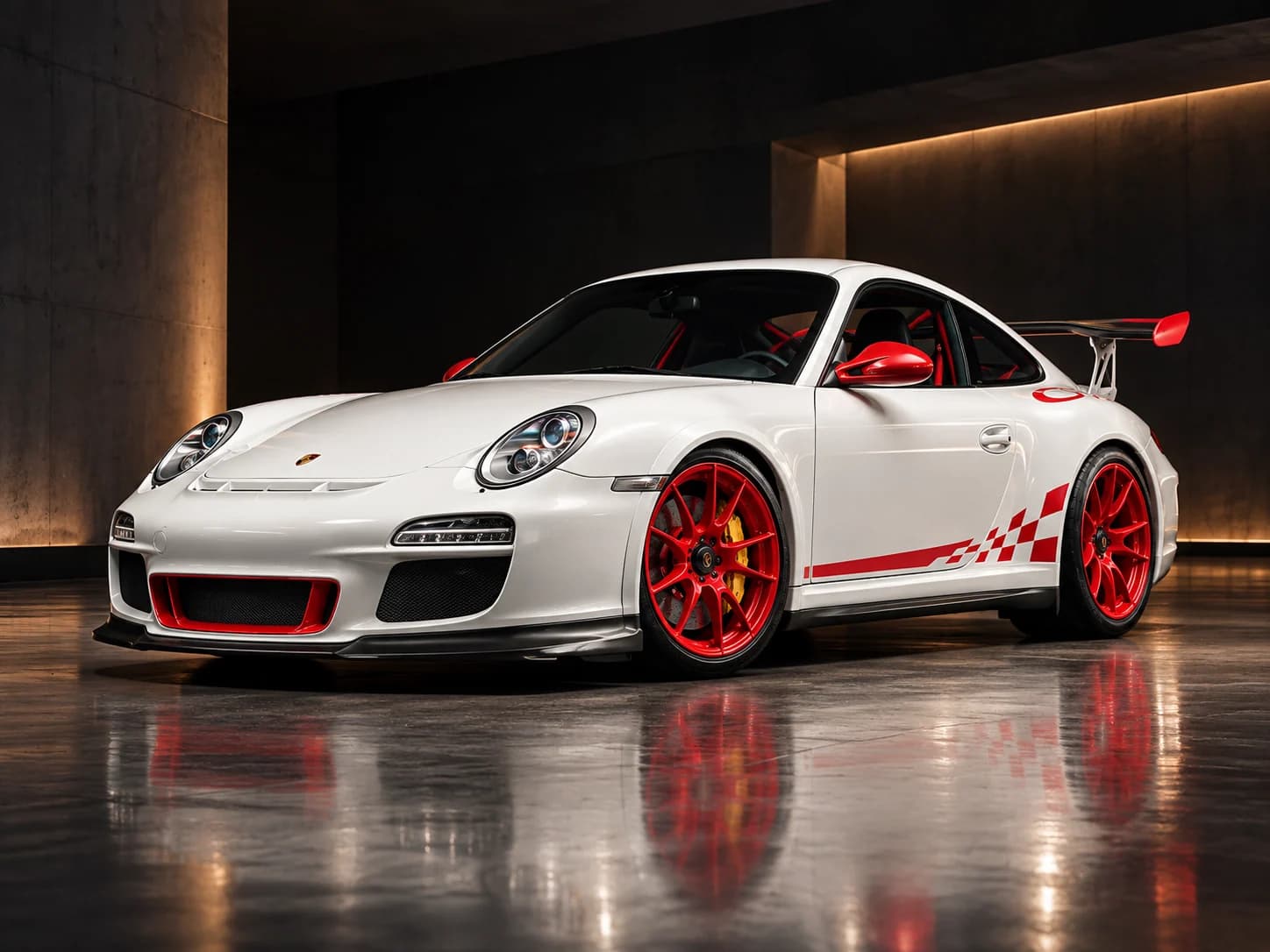
Imagine that garage holds a 997 GT3 RS, an Acura NSX-T and a Ferrari F355 Spider. On paper it reads like a spreadsheet of blue-chip modern classics. In person it reads like something else entirely: a collection of last chances. Each of these cars is the final word on something its maker would never build again. And every one of them has three pedals.
The last of the hydraulic Porsches
Start with the Porsche, because the Porsche will insist on it. The 997.2 GT3 RS is the last GT3 RS you could buy with a manual gearbox, the last with hydraulic power steering, and among the last 911s with the Mezger-derived engine, the motor whose bones trace back to Le Mans. It is a 3.8-litre flat-six that wants to live above 6,000 rpm and makes you feel slightly guilty every time you short-shift it.
What makes it worth keeping isn’t the lap time. Newer GT cars are quicker in every way a stopwatch can measure. It’s the way information arrives. The steering wheel squirms in your hands over a crown in the road. The front tyres talk to you in a language that electric steering, however clever, translates rather than speaks. Owners don’t describe it as fast. They describe it as honest.
Newer GT cars are quicker in every way a stopwatch can measure. The 997 is quicker in the way that matters on a Sunday.
The supercar that wasn’t trying to scare you
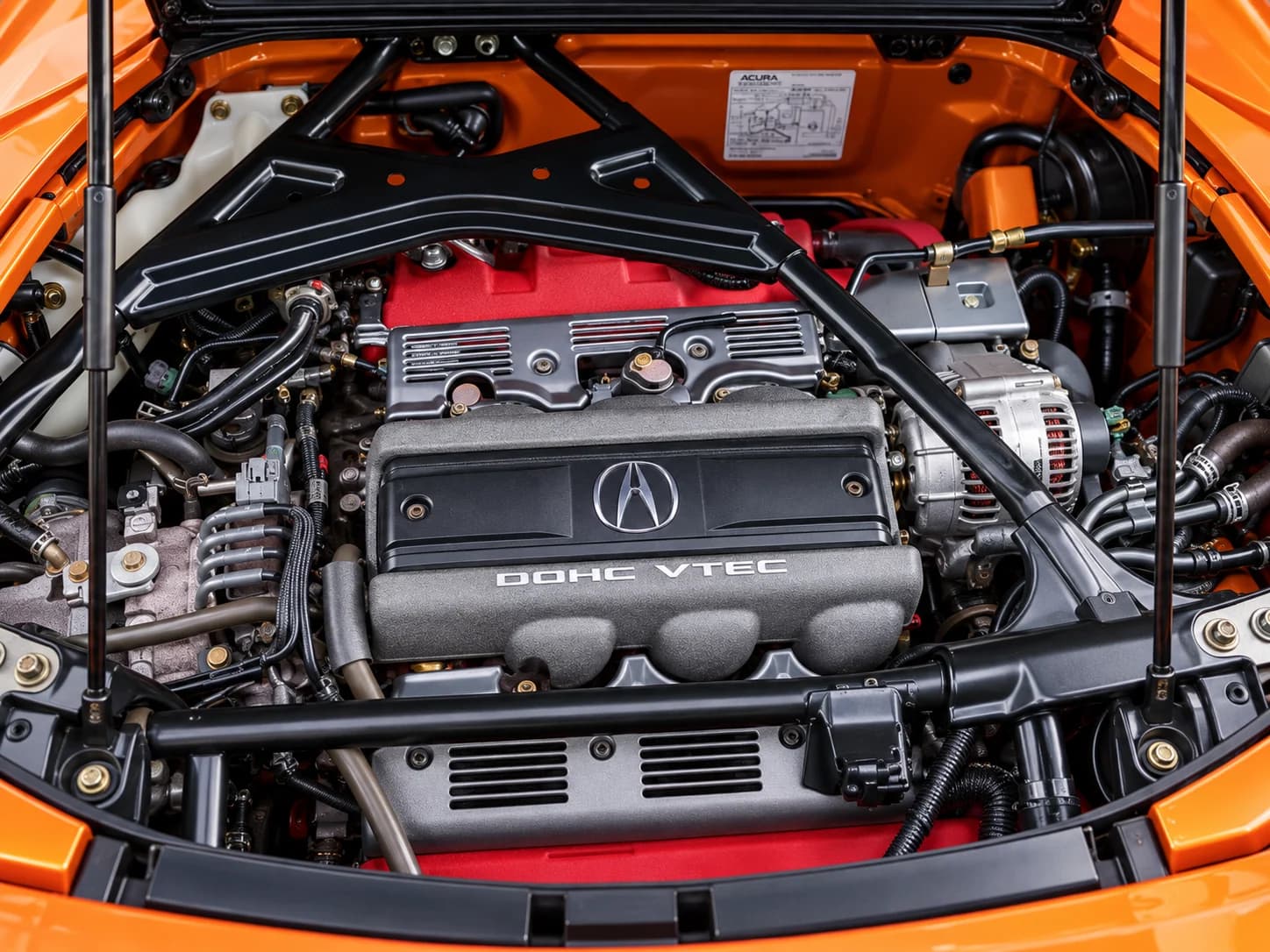
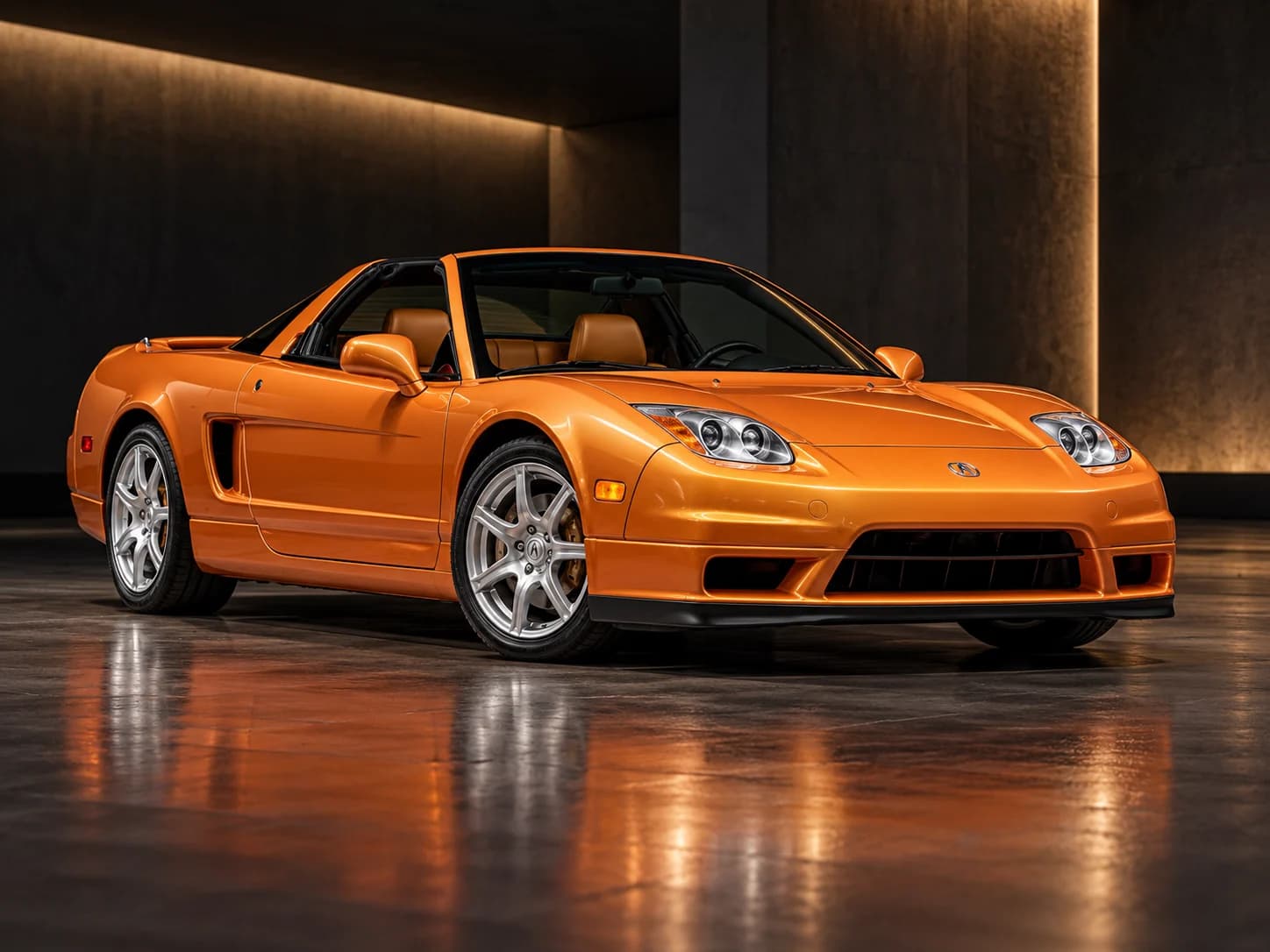
Then the NSX, which arrived in 1990 and politely embarrassed the established order by being a mid-engined exotic that started every morning, didn’t overheat in traffic, and didn’t require a second mortgage when the clutch wore out. Its aluminium monocoque was a first for a production car. Its VTEC V6 sings in two distinct voices, the second of which arrives at a point on the tachometer where most engines of its era were already giving up.
The NSX-T, with its removable roof, is the version that turns a drive into an occasion without turning a drive into a project. It is the car in this garage that gets used the most and complained about the least. That is not an accident; it is the entire point of the car.
The Ferrari with a gate
And then the F355 Spider, a car that sounds like an argument you’re happy to lose. The 3.5-litre V8 has five valves per cylinder and makes its best noises somewhere north of polite. From 1997 you could order it with Ferrari’s first paddle-shift road-car gearbox. The cars that matter most to the people in garages like this one have the polished metal gate instead, and the clack of the lever moving through it is part of the soundtrack.
The F355 is the car here that asks the most of its owner. It wants its major service done properly, which on this car means the engine comes out. It wants to be driven, not stored. In return it delivers the purest version of the late-analogue Ferrari experience: hydraulic everything, open-gate shifting, and a cabin you can hear the engine through without trying.
A week in the life of three manuals
Owning three cars like these is less like curating a museum and more like keeping three horses. Each one has a temperament, a feeding schedule and a preferred kind of exercise. The Porsche wants a proper road, ideally one with elevation changes and no traffic, and it wants to be warm before you ask anything of it. The NSX wants to be used, frequently and without ceremony; it is the car that goes for coffee, runs to the hardware store and quietly racks up the most miles. The Ferrari wants an occasion, and it will let you know, through the thermometer and the clutch pedal, when it hasn’t had one in a while.
That rotation is the secret to keeping all three healthy. Cars that sit develop opinions: seals dry, batteries sulk, tyres flat-spot. Cars that are driven gently and often tend to stay sweet. The owners who keep collections like this for decades almost all describe the same habit, which is that every car gets driven at least once a month, whether it needs it or not. It sounds indulgent. It is actually maintenance.
The skill is the point
There is a reason enthusiasts get misty about manual gearboxes, and it isn’t nostalgia for its own sake. A manual is the last component in a modern car that requires a learned, physical skill to operate well. Anyone can be fast in a car with a dual-clutch gearbox; the computer does the hard part. In a manual, the hard part is yours. Matching revs on a downshift, feeding the clutch out smoothly on a steep hill, choosing to hold third instead of grabbing fourth because you want to hear the engine come on cam: these are decisions, and decisions are what make a drive feel like yours.
Each of these three cars rewards that skill differently. The Porsche’s gearbox is short, mechanical and precise, like operating a well-made rifle bolt. The NSX’s shift is light and exact in a way that makes it easy to drive smoothly every day. The Ferrari’s gate demands deliberate movements and punishes hurry, which is exactly why getting it right feels so good. Three cars, three dialects of the same language.
A dual-clutch gearbox will always shift faster than you. It will never let you get a downshift perfectly right on a cold morning and grin about it all the way home.
How the third pedal disappeared
None of these manufacturers killed the manual out of spite. They killed it because the numbers told them to. Dual-clutch gearboxes shift in milliseconds, never miss a gear, hit emissions test cycles with metronomic precision and let engineers chase lap times that a human left foot simply can’t match. Once the paddles got good, the business case for a stick evaporated, and so did the take rate. Ferrari, which had once made the polished gate a signature, had quietly stopped offering a manual altogether by the early part of the last decade. When the NSX name returned, it came back as a hybrid with nine ratios and no clutch pedal at all.
Porsche is the instructive exception, because Porsche tried it and got shouted at. The 991 GT3 arrived with a dual-clutch gearbox only, and the reaction from the people who actually buy GT cars was loud enough that the company built the manual-only 911 R, watched it disappear instantly, and then restored a stick to the GT3 itself. The RS, though, stayed paddle-only. Which is how a car that was simply the current model in 2010 became, in hindsight, a full stop.
There is a lesson in that sequence about how cars become collectable. Rarely is it the fastest or most advanced version of a thing. More often it is the last version built to an older idea, before the industry decided that idea was no longer worth the trouble. Nobody knew they were buying an ending at the time. They were just buying the one with three pedals because that was the one they wanted to drive.
Why these garages never come up for sale
The common thread is not a brand or a decade. It’s engagement. These are cars that require you, specifically, to be good at driving them, and that get better as you do. You can own a modern supercar for a year and know everything it has to tell you. You can own an F355 for ten and still be learning how to get the downshift into second exactly right.
The market has noticed, and that matters to the spreadsheet half of a collector’s brain. Across these models, the manual version frequently trades apart from its paddle-shift sibling, and the gap tends to be widest exactly where the manual was the last of its kind. But the owners of garages like this one rarely bring that up first. They talk about the drive home.
Which is why these collections stay together. Selling one of these cars doesn’t buy you a better version of it. There isn’t one. Nobody is going to build a lighter, more communicative, hydraulically steered, manual-only GT3 RS again, or a mid-engined Honda that weighs what the first NSX weighed, or a V8 Ferrari with an open gate. So the cars stay where they are, under their covers, until next Sunday, when they come out again before the roads get busy.
The Stable editors