How Stable Value works
AI reads the car. Statistics value it.
Stable Value isn’t a guess or a list price. AI identifies exactly which car you have; a statistical model then values it from real sales of the same variant, restated to today and adjusted to your car. Scroll through it step by step, then try it yourself.
Step by step
From a VIN to a value you can trace.
The chart runs the real Stable Value model on an example 2010 911 GT3 RS. The sales are illustrative; the method is exactly what values your car.
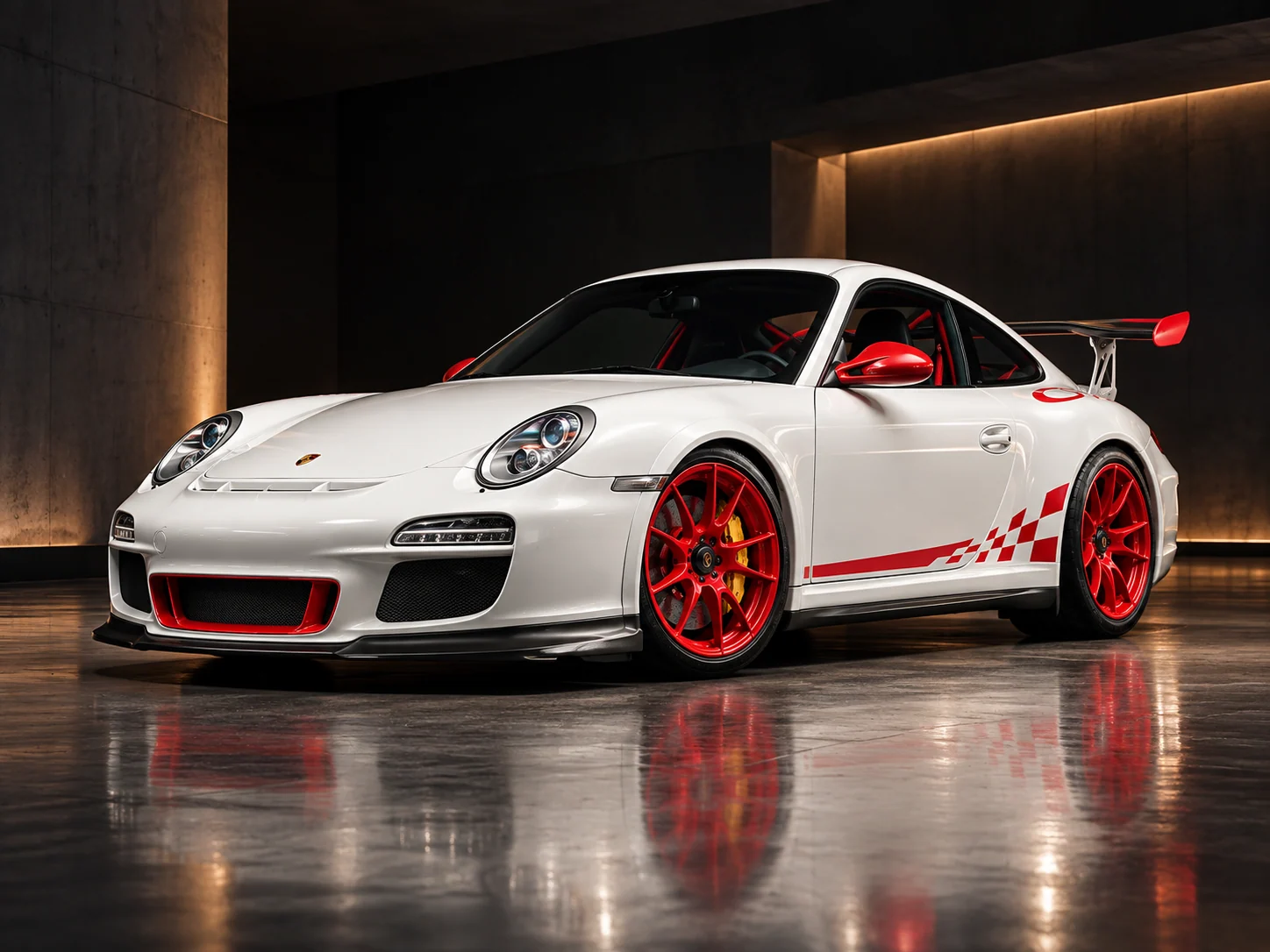
2010 Porsche 911 GT3 RS (997.2)
Step 1 of 8
- VIN2010 · Porsche · 911 GT3 RS · 997.2
- Window stickerCarrara White · Clubsport · PCCB
- PhotographsFront ¾ matches a 997.2 GT3 RS
- Records18,500 miles · six-speed manual · original
Follow one sale
- Sold Feb 2022 · 47,000 mi
- —
- Market since then (−8.0%)
- —
- As your car (18,500 mi, original)
- —
- Its weight in the value
- —
01
It starts by reading the car.
AI reads the VIN, the window sticker and your photographs, and pins down exactly which car this is: not just a 911 GT3 RS, but a 2010 997.2, Carrara White, six-speed manual, 18,500 miles. Everything after this depends on getting that right.
02
Then it finds the car’s market.
Every recorded sale of comparable cars over the last several years. Each dot is one sale: when it sold and what it sold for. The grey ones are a related variant, the plain GT3.
49 sales · 12 of a related variant
03
Only its own variant counts.
A GT3 is not a GT3 RS. The model keeps only sales of this exact variant. If a variant is too rare, it borrows related ones, and says so, restated with a fitted difference rather than at face value.
37 sales of the 997.2 GT3 RS
04
Every sale is restated to today’s market.
Collector markets move. The model fits a level for each year from the sales themselves, then moves each sale to today’s market. A 2022 sale, near the peak, comes down; a 2021 sale comes up.
2021: 85 · 2022: 109 · 2023: 100 · 2024: 100 · 2025: 95 · 2026: 100 (today = 100)
05
Then adjusted to this exact car.
Mileage matters, but not by a fixed rule: the model measures how much it matters for this variant, from these sales. Originality and title are priced the same way. Each dot moves to where it would have sold if it were your car.
mileage elasticity -0.23: 10% fewer miles ≈ 2.3% more value · modified −11.2%
06
Closer evidence counts for more.
Each sale gets a weight: recent sales count more than old ones, cars from the same model year more than others, and cars with a recorded mileage more than guesses. The bigger the dot, the more it counts.
weight = recency (halves every 2 years) × model-year closeness × mileage closeness × mileage precision
07
Outliers are set aside, not hidden.
A sale far from the rest after adjustment (here, a car with an accident history) is set aside and reported, so one unusual car can’t drag the value. A 1,200-mile time capsule isn’t an outlier: once adjusted for its mileage, it sits with the rest.
1 set aside: more than 3 median deviations from the rest
08
The value, its range and how sure it is.
The value is the weighted middle of the adjusted sales. The range is where most of them fall, and the confidence comes from how many there are and how tightly they agree. Every figure can be traced back to these sales.
value $229,000 · range $220,000–$239,000 · high confidence
Try it
Change the car, watch the value move.
The same model, re-run as you change the car. Every adjustment shows what it did and why.
Stable Value · 2010 Porsche 911 GT3 RS (997.2)
$229,000
Range $220,000–$239,000 · high confidence · 36 sales
- Market trend+4.5%Every sale restated to the 2026 market using sale-year effects fitted on 37 sales.
- Mileage−4.8%18,500 mi against a median of 15,000 mi in the comps; fitted elasticity -0.23 (a 10% change in miles moves price 2.3%).
- Originality+0.0%Modified cars sold 12% below original ones; comps adjusted to this car (original).
- Exterior colourNot appliedCarrara White: the comps don't record colour, so its premium or discount isn't measured yet.
- Other factory optionsNot appliedNo window sticker on file. Options such as a Weissach Package can move the value a lot; upload the sticker to apply them.
- TitleNot appliedClean title.
- ConditionNot appliedNo condition assessment yet: the value assumes the typical condition of the comps. Assessing it moves the value within the range.
Illustrative sales, run through the real Stable Value model.
Every input
What goes into a Stable Value.
Some inputs describe your car; others come from the market. Where the model can’t measure something yet, it says so rather than guessing.
About your car
Identity, from the VIN
Year, make, model, generation and, where the VIN encodes it, the exact variant. The foundation everything else rests on.
The window sticker
AI reads colours, factory options and the original price, so options that move value (a Weissach Package, carbon-ceramic brakes) are priced from sales that name them.
Your photographs
AI recognises the variant from the car itself and checks it against the records, catching a Carrera badged as a Turbo.
Mileage
How far it has been driven, and how precisely that’s known. The model measures how much mileage matters for this variant, rather than applying a fixed rule.
Gearbox
Manual or automatic, from your records or the variant’s year. Where the market pays for three pedals, the model measures by how much.
Originality and condition
Modified or original, priced from sales that say which. A condition grade places the car within the range of its comparable sales.
Title
A clean title is the baseline; a rebuilt or salvage title is discounted, from branded sales where there are enough, otherwise by a standard amount.
History report
AI reads owners, service and reported events from a CARFAX or AutoCheck report, and flags what matters to a buyer.
From the market
Comparable sales
Recorded sales of the same variant over several years: auctions, dealers and private sales, with duplicates and unsold cars removed.
The market’s direction
A level for each year, fitted from the sales themselves, so every sale is restated to today’s market.
Weights
Recent sales, cars from the same model year and sales with recorded mileage count for more.
Outliers
Sales far from the rest after adjustment are set aside and reported, never silently dropped.
What it isn’t
Honest about what a model can know.
Not an appraisal
A Stable Value is an estimate from market evidence. An appraiser who inspects the car can see things no dataset can.
Not an offer
Nobody is committing to buy at this price. It’s where comparable cars have been selling, adjusted to yours.
Not certain
Every value comes with a range and a confidence level. Rare cars with few sales get wider ranges and lower confidence, and the page says so.
Stable Value
See what your car is worth, and why.
Add a car and its value arrives with every sale, adjustment and weight behind it.