Market note · 5 min read
The 997 GT3 RS and the premium on hydraulic steering
· Words The Stable editors
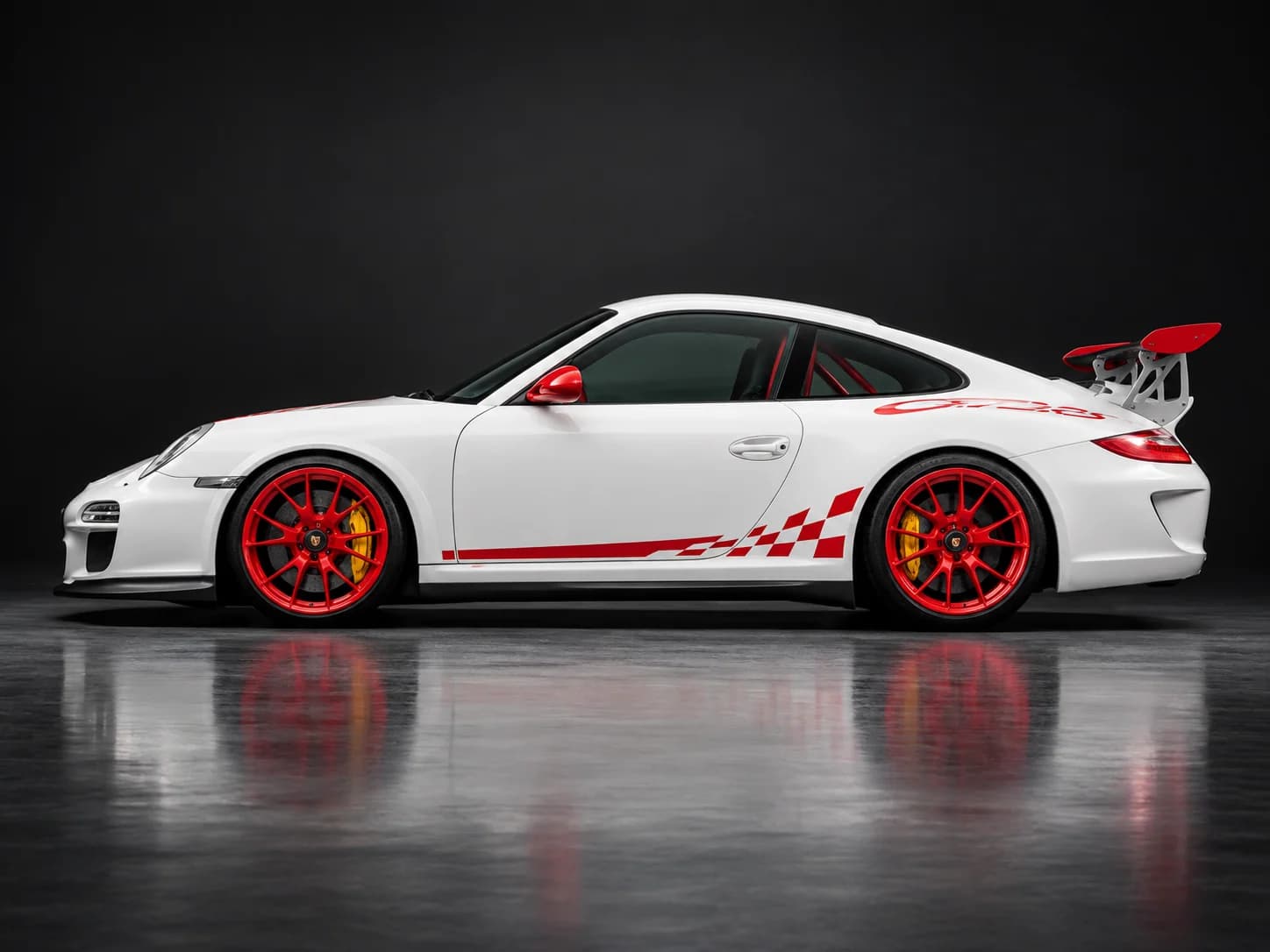
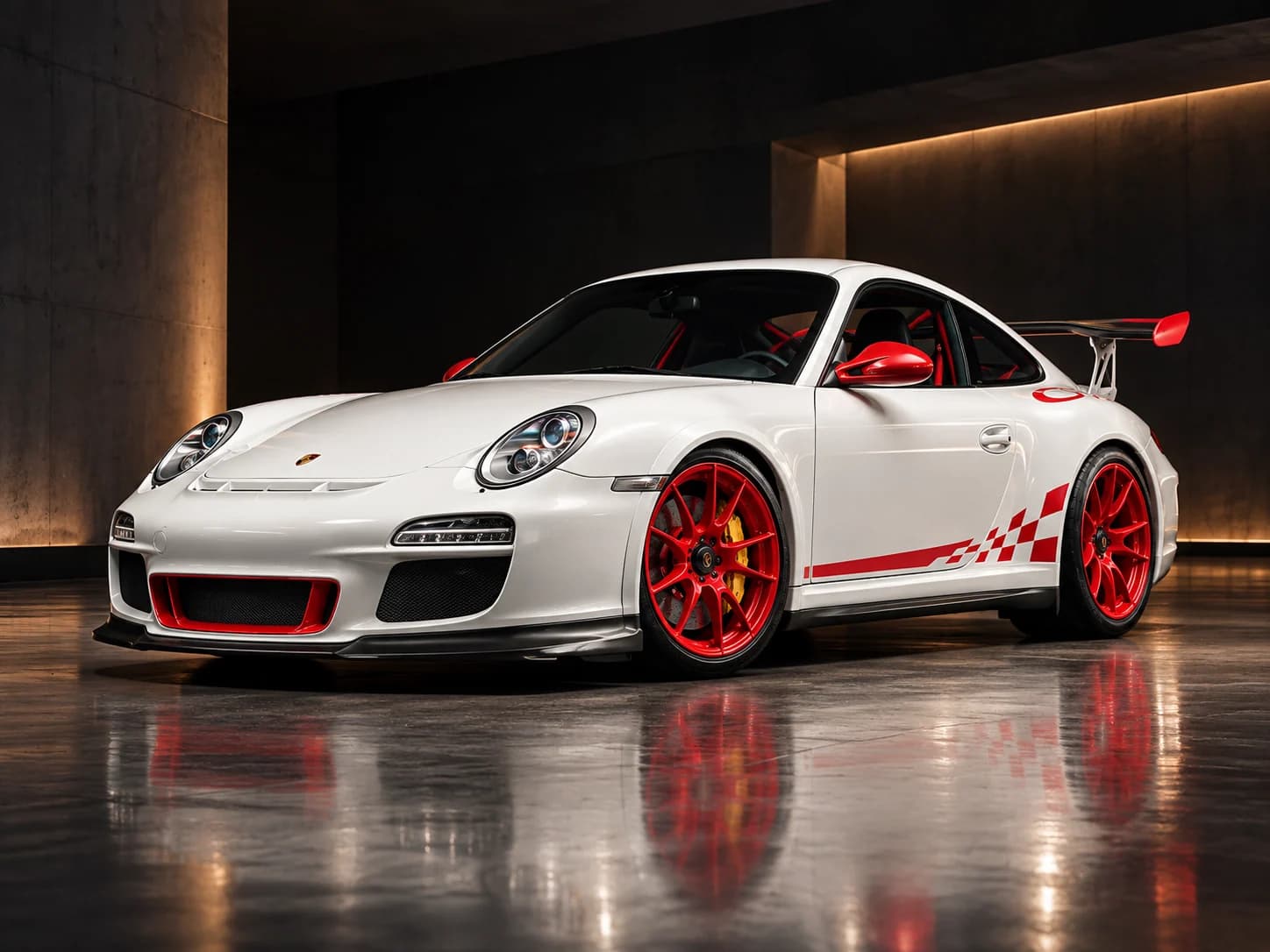
Every few years the automotive industry quietly removes a component that enthusiasts didn’t realise they loved until it was gone. Carburettors. Gated shifters. Engines that breathed without help. For Porsche’s GT cars, one of the big ones was hydraulic power steering, and the car that marks its passing is the 997 GT3 RS.
What actually changed
Hydraulic steering uses an engine-driven pump to push fluid that helps you turn the front wheels. It’s heavier, thirstier and more complicated than an electric motor bolted to the steering rack, which is exactly why the industry moved on. When the 991-generation 911 arrived, it switched to electric power steering, and the GT cars followed.
Electric steering is more efficient and enables the driver-assistance features modern buyers expect. It can also be tuned to be extremely good, and Porsche’s later efforts are among the best electric systems ever fitted to a road car. But physics is stubborn. A hydraulic system has a direct, fluid connection between what the tyres feel and what your hands feel. Electric systems have to measure that information and then recreate it. The best ones recreate it brilliantly. The 997 doesn’t have to recreate anything.
Electric steering translates what the front tyres are saying. Hydraulic steering lets you overhear it.
The rest of the package
Steering alone wouldn’t carry a premium. What makes the 997.2 GT3 RS such a hinge point is how many endings it gathers in one car. It was offered only with a six-speed manual. Its 3.8-litre flat-six descends from the Mezger family, the race-derived engines Porsche fans speak about in the hushed tones usually reserved for cathedrals. The first 991 GT3 arrived with a new engine, a dual-clutch gearbox only, and a high-profile engine recall in its first year, which did nothing to dent its pace and plenty to make the previous car look like the safe pair of hands.
Then there is the 997 GT3 RS 4.0 of 2011, a 600-car farewell that pushed the Mezger engine to four litres. It sits at the top of this family tree, and its gravity tends to pull the rest of the 997 GT cars along behind it.
What the market is saying
Look across a decade of 911 GT car sales and a pattern repeats: the cars that marked the end of something trade on that fact. The 997 GT3 RS is a textbook example. Newer RS models are faster, more capable and more usable on a daily basis. Buyers who want the 997 are not buying lap times. They’re buying the last time Porsche combined a manual gearbox, hydraulic steering and a Mezger engine in an RS.
That makes the details matter more than usual. Original-spec cars with documented service, verifiable factory options and honest mileage are the ones that set the pace. Track history isn’t automatically a negative on a car like this. Undocumented track history is.
The details that make an RS an RS
The RS badge on a 997 GT3 isn’t just a sticker package. The RS uses the wider body of the all-wheel-drive Carrera, which gives it a broader track and a more planted stance, along with lightweight touches such as a plastic engine lid and rear window. The 997.2 brought centre-lock wheels, active engine mounts that firm up under hard driving to stop the engine’s mass from shifting about, and a lightweight single-mass flywheel that lets the flat-six rev with an eagerness that borders on rude.
Options matter enormously on these cars. Ceramic composite brakes, the front-axle lift system that saves the splitter from every steep driveway in America, and the fixed-back bucket seats all change how the car feels and how the market regards it. Ceramics in particular split opinion: they shrug off heat on track and save unsprung weight, but replacement discs cost a small fortune, and some owners would rather have the steel brakes and the peace of mind. Neither choice is wrong. It just needs to be the factory’s choice, or a well-documented later one.
Living with the steering
The first thing people notice when they drive a 997 GT3 RS after a newer car isn’t the engine or the gearbox. It’s the steering wheel moving in their hands. On a rough road, it fidgets and tugs, reporting every ridge and camber change. Some drivers find that tiring. Most people who buy this car find it addictive, because it means the car is constantly telling you how much grip the front tyres have left. On a fast, unfamiliar road, that information is worth more than any amount of horsepower.
Hydraulic steering does ask for a little care in return. The pump, hoses and fluid need checking as part of routine service, and a car that has sat for long periods can benefit from a fresh look at seals and lines. None of this is onerous. It is simply part of owning a car built around mechanical feedback rather than software.
Some drivers find the steering busy. The people who buy this car call it conversation.
Buying one today
If you’re shopping for a 997 GT3 RS, the checklist is short but non-negotiable. Confirm the specification against the original window sticker or a factory record. Read the service history for evidence of regular fluid changes, including the steering system, and for any engine or gearbox work, with invoices from known specialists. Ask directly about track use and look for the signs: wear patterns on the seat bolsters, stone chips concentrated on the front, a history of brake replacements. None of those is a deal-breaker on a car built for the circuit, but all of them should be explained. And if the car has been modified, find out whether the original parts come with it. A complete car with its paperwork is the version the market rewards, and the one you’ll be glad to own when you eventually hand it on.
If you own one
Keep the steering fluid fresh, keep the receipts, and keep the original parts if you’ve changed anything. Wheels, seats and exhausts that went into the loft are worth a great deal more back on the car than in a box marked ‘spares’. And drive it. The 997 GT3 RS was built to tell you what the road is doing. It would be a shame to leave it with nothing to say.
The Stable editors