Collections · 5 min read
Twenty years with one NSX: what a first owner's archive is worth
· Words The Stable editors
There is a manila envelope that comes with certain Acura NSXs, and if you know, you know. It is slightly too thick to close. It smells of old paper and, faintly, of the dealership where the car was bought. It is the reason one NSX can be worth meaningfully more than another that looks identical in photographs.
This is an essay about that envelope: what goes into twenty years of single ownership, and why the market pays for it.
The car that made the envelope possible
The NSX was always going to attract this kind of owner. When it arrived for 1991 in America, it was a mid-engined, aluminium-bodied exotic that behaved like a Honda: it started, it idled, it didn’t cook its clutch in traffic. That reliability is precisely why so many NSXs stayed with their first owners for decades. You don’t sell the car that never gives you a reason to.
It is also why single-owner cars are, by exotic-car standards, not rare. Which means buyers can afford to be picky, and the picky ones want the envelope.
What’s inside
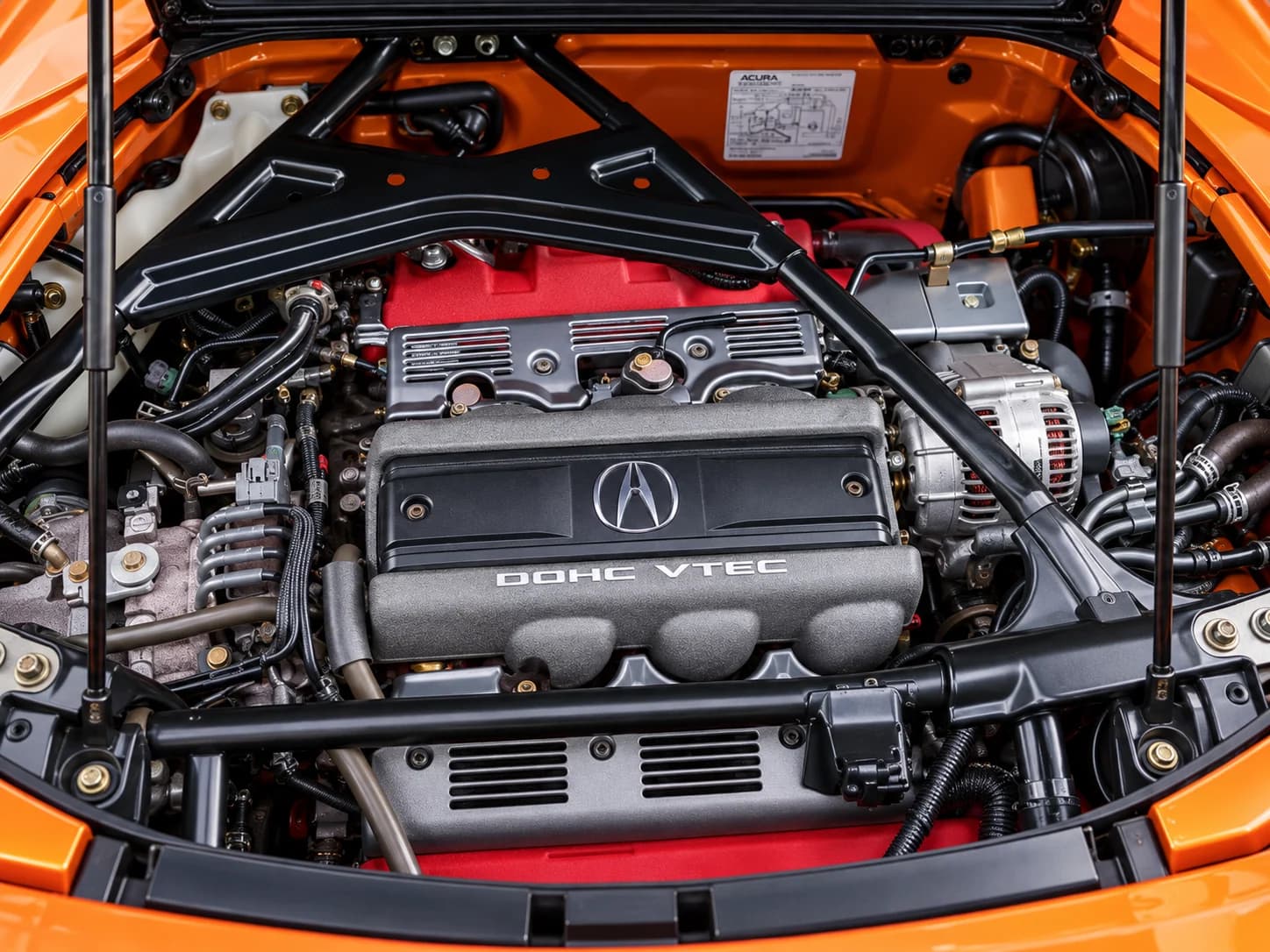
First, the window sticker, which confirms the car’s specification, its colour combination and the dealer it was shipped to. On an NSX-T, it also confirms exactly which version of the car you’re looking at, which matters more than you’d think in a model line that changed engines, gearboxes and headlights over fifteen years.
Then the service history, ideally in date order and ideally from the same few places. The timing belt receipts are the ones buyers turn to first. Not because the belt is fragile, but because its replacement is the single best proxy for whether an owner did the expensive things on time. An NSX with a clear belt history is a car that was looked after. One with a gap is a conversation.
The timing belt receipt isn’t really about the belt. It’s the best proxy anyone has for whether an owner did the expensive things on time.
Then the small things, which turn out not to be small: both keys, the owner’s manuals in their wallet, the tool kit, the original radio code card, the car cover with the dealer’s embroidery. Each one says the same thing. Someone paid attention.
Why the market pays for paper
Single ownership answers the two questions every buyer actually has, which are ‘what happened to this car?’ and ‘how do you know?’ A long chain of owners can answer the first question with confidence. Only documents answer the second. Twenty years of continuous records from one person removes guesswork, and guesswork is what buyers discount.
Watch the NSX market for any length of time and you see it again and again: well-documented, long-held cars of the same model and mileage change hands above their less-documented siblings. Nobody can pay you for a story they can’t verify. Everyone will pay for one they can.
Knowing which NSX you’re looking at
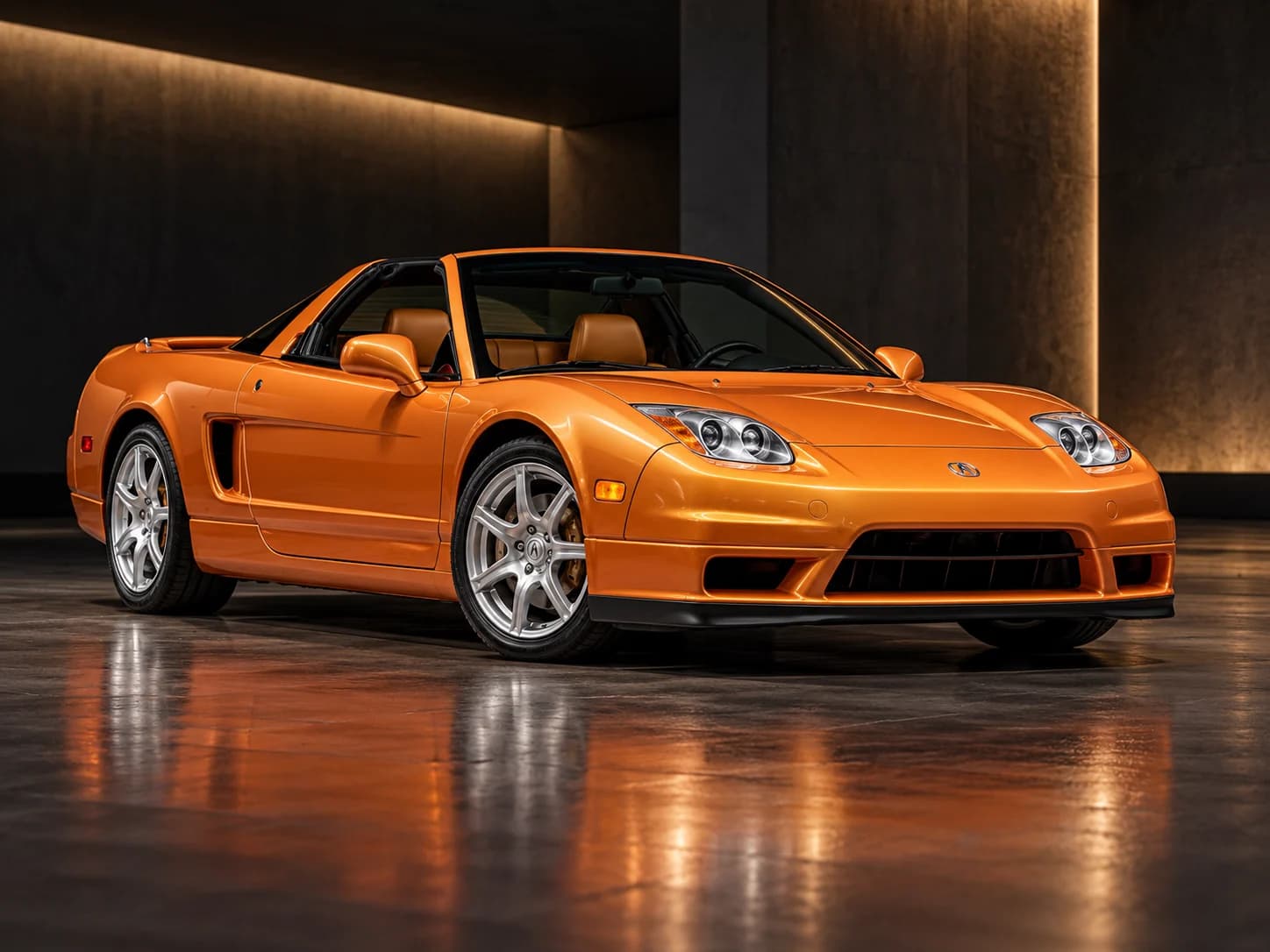
Part of what the envelope does is settle the question of exactly which NSX a car is, because the model changed meaningfully over its long life. The early cars used a 3.0-litre V6 and a five-speed manual or a four-speed automatic. The NSX-T, with its removable roof panel, joined the American line-up for 1995 and eventually became the most common body style. For 1997, manual cars moved to a larger 3.2-litre engine and a six-speed gearbox, while automatics kept the smaller engine. And for 2002, the pop-up headlights gave way to fixed units, a change that still divides opinion among owners.
Each of those changes affects value, and each is confirmed most cleanly by the car’s original paperwork. A window sticker removes any doubt about engine, gearbox, body style and colour combination. On a car where the difference between versions can be significant, that certainty is worth paying for.
The habits of long-term owners
People who keep an NSX for twenty years tend to share a few habits. They use a small number of trusted mechanics, often the same dealer or specialist for decades, which makes the service record easy to read and the work easy to trust. They do the expensive maintenance when it’s due rather than when something goes wrong. And they keep everything, including the things that seemed pointless at the time, such as the original tyre receipts or the brochure from the showroom.
They also drive the car. One of the quiet truths of the NSX market is that a car with sensible, documented mileage and a complete history is often a better buy than an ultra-low-mileage example that has spent years parked. Cars are machines, and machines like to be used. A long-term owner who drove the car regularly and maintained it properly has usually left it in better mechanical health than one who kept it under a cover.
A car with sensible, documented miles is often healthier than one that spent fifteen years under a cover. Machines like to be used.
When the envelope changes hands
Eventually even the most devoted owner hands the car on, and how that happens matters. The best handovers include the complete file, the spare key, the manuals and every small accessory, along with a conversation: which mechanic knew the car best, what the car tends to need, which quirks are normal. That knowledge is part of the car’s value, and too often it’s lost the moment the new owner drives away. Writing it down, alongside the receipts, is the final act of good stewardship. It turns twenty years of care into something the next owner can actually use.
What the envelope can’t tell you
For all its power, paper is not a substitute for a proper inspection, and the best NSX buyers treat the envelope as the start of their homework rather than the end of it. The car’s aluminium body is wonderful when it’s straight and expensive when it isn’t, because repairing it properly takes skills and equipment many body shops simply don’t have. A specialist will look at panel gaps, paint depth and the condition of the structure underneath, and an honest envelope will already contain the answer to whatever they find.
The NSX has its known quirks, too, and a long-term owner will usually have met them. Early five-speed gearboxes have a well-known weakness that specialists will ask about by name. The climate control and radio displays tend to fade with age. Manual cars didn’t get electric power steering until the mid-1990s, which is either a flaw or a feature depending on whom you ask. None of this is dramatic. All of it is easier to judge in a car whose history you can read.
The envelope is where the homework starts, not where it ends.
And that, in the end, is what twenty years of care with one owner actually buys you: not a perfect car, because there is no such thing, but a car with no secrets. The NSX was designed by people who believed an exotic should be something you could live with every day. The owners who kept theirs for two decades simply took them at their word, wrote it all down and handed it on intact.
The Stable editors